Doors hold the essence of mystery, seperating two distinct areas, keeping things apart. They are a barrier, a boundary, which must be negotiated, before the threshold can be crossed. The mysterious beyond is hidden from sight by the closed door, and some sort of action must be taken before the otherside becomes visible and available to us. The closed door is full of potential, for anything might lie beyond, as yet unknown and unseen. Yet the closed door may also be limiting, preventing us ever gaining access to its hidden contents.

Sometimes gaining access may be as simple as approaching and turning the handle, but perhaps the door is locked. Then we need to knock or ring the bell and negotiate with the guardian or keeper of the door. Saying the right words, or holding the correct credentials will then secure our passage. This theme recurrs in countless fairytales and myths, from Ali Baba to Cuchulin. Belonging to the club or group which lies within, or paying the doorkeeper might also secure passage, but some doors remain subbornly closed, unless you hold the key.

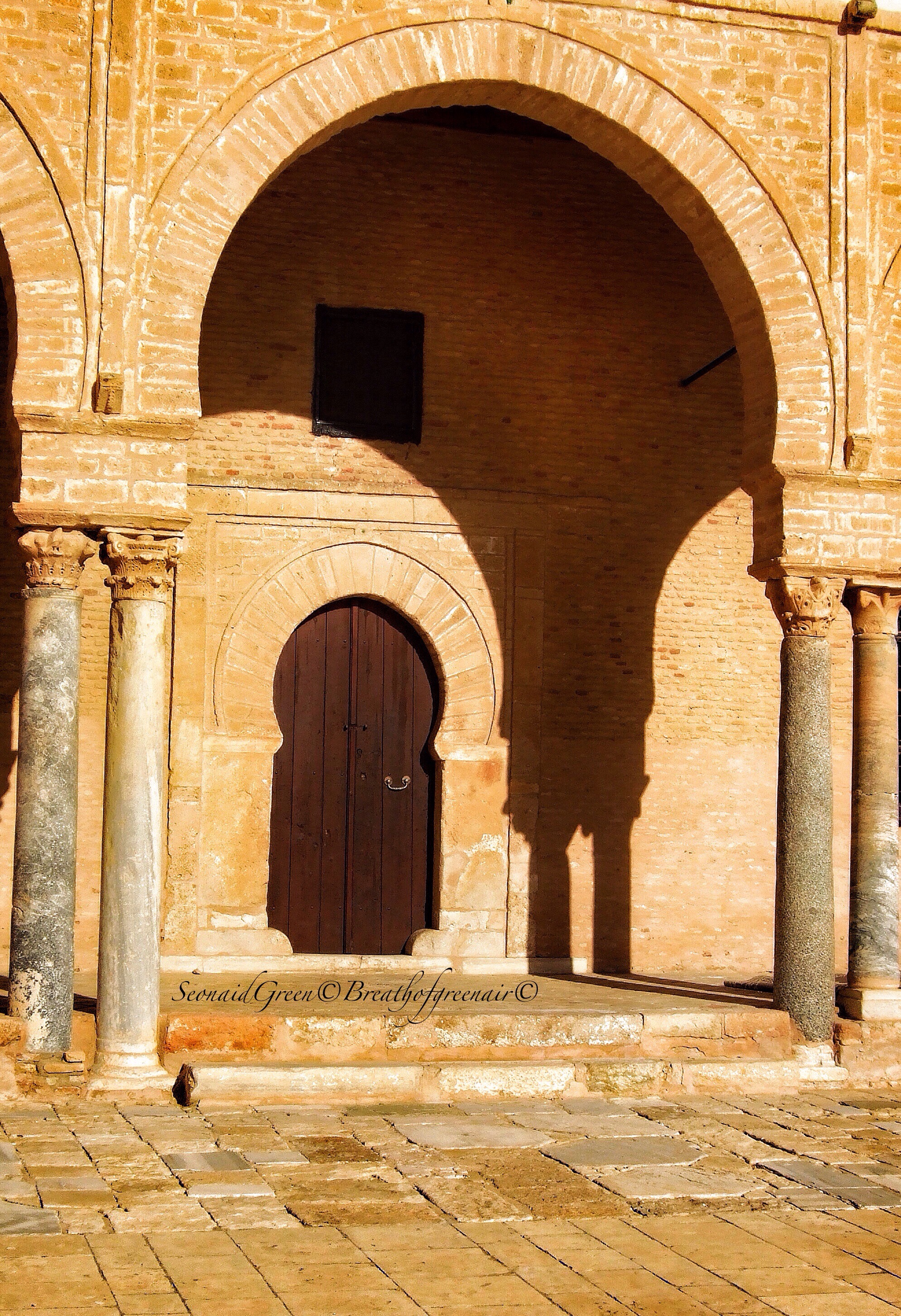
The doors may remain closed to protect those who live within, or to maintain a secret, or to keep a space sacred and to keep out the profane. These nunnary doors are heavily fortified, and their protective powers are boosted by the stone guardians watching from above. Lions, bulls and flames are frequent guardian symbols found on and around doors, adding to the protective qualities of the barrier.
 So when we face a closed door, we face a choice. What action will we take? Will we turn back defeated by the barrier,or will we push forwards and attempt to gain access? The nature of the door itself, and its guardians may well shape our choice, helping us decide if we will feel comfortable with what lies beyond. The symbolism of a door closing on us, is one of an opportunity fading, of a potential now lost to us.. That way no longer lies open to us without negotiation and effort.
 The symbolism of a door opening to us, is one of exciting new potential. The block which stood before us has now been removed and we are free to move forwards, and to cross the threshold into something new. We are invited forwards into change, with nothing to negotiate except the transition of one place to another. The guardian of the threshold is welcoming us forwards. Change beckons us with open arms.
 So the door is protective guarding the doorway, denying or allowing passage through from one place or one state to another. The symbolism of the door is closely bound with the symbols of doorways and thresholds, and of keys and locks, hinges and handles, bells and guardians. The door itself either allows movement forwards or prevents it, and in this way we can see the door as a symbol of duality, as it is either closed or open, locked or unlocked.
The root of the English word door lies in the Sanskrit word Duarah, which means two doors or gates. From this comes the Greek Thura, the German Tur, Middle English Dure or Dor, Old Norse Dyrr and these all mean door. We also find the Gaulish Doro which means mouth, giving us an interesting image of the lips as double doors to our mouths and the words beyond. A guarded way in and out of our bodies.
To see more doors join the weekly photo challenge.






 breathofgreenair
Pingback: Zanzibar/Tanzania Triptych door – Digital Art AB
Pingback: zanzibar doors | Site Title
Pingback: Doors Of Zanzibar – ardugvarsitylevel
Pingback: Door – Site Title
Pingback: Door of Zanzibar Research Q&A – Michelle's Art & Designs
Pingback: Door Research – Site Title
Pingback: Door Research – Digital Art
Pingback: research for Doors of Zanzibar – silver moon
Pingback: Doors of Zanzibar Research Questions – KRecile
Pingback: research – Site Title
Pingback: Door Triptych (Research) – wonder zone☾
Pingback: Triptych Door – art space
Pingback: Research – Mark's BLOG
Pingback: Zanzibar Research – dj agnite's digital arts blog
Pingback: Zanzibar/Tanzania Triptych Door Research – Jeremy Gutierrez's Digital Art Blog
Pingback: Door Triptych Questions – White Rose
Pingback: Door Triptych questions – R.C Vill
Pingback: Zanzibar Research – Site Title
Pingback: DOOR TRIPTYCH~ – Ame's Drawings/Sketches/Photos
Pingback: Doors of Zanzibar – Margarita's page
Pingback: Door Triptych – Dream Sky
Pingback: Project 1: Zanzibar/Tanzania Triptych Door – mad x mtn
Pingback: Door Triptych – Art
Pingback: Zanzibar/Tanzania Triptych Door – Let's Art!
Pingback: Door Triptych – Malus es
Pingback: Frost's Blog
Pingback: DOORS OF ZANZIBAR – A world of sketches
Pingback: Door Triptych (Unfinished) – Blog & Sketches
Pingback: Zanzibar/Tanzania Triptych Door – A Slight Fascination With Heterochromia
Pingback: Site Title
Pingback: Zanzibar Door – Live, Last, Forever
Pingback: Zanzibar – TheDerpingTree
Beautifully photographed and written. I love taking photos of doors too, whenever they are unique and interesting, even abandoned doors have a charm about them.
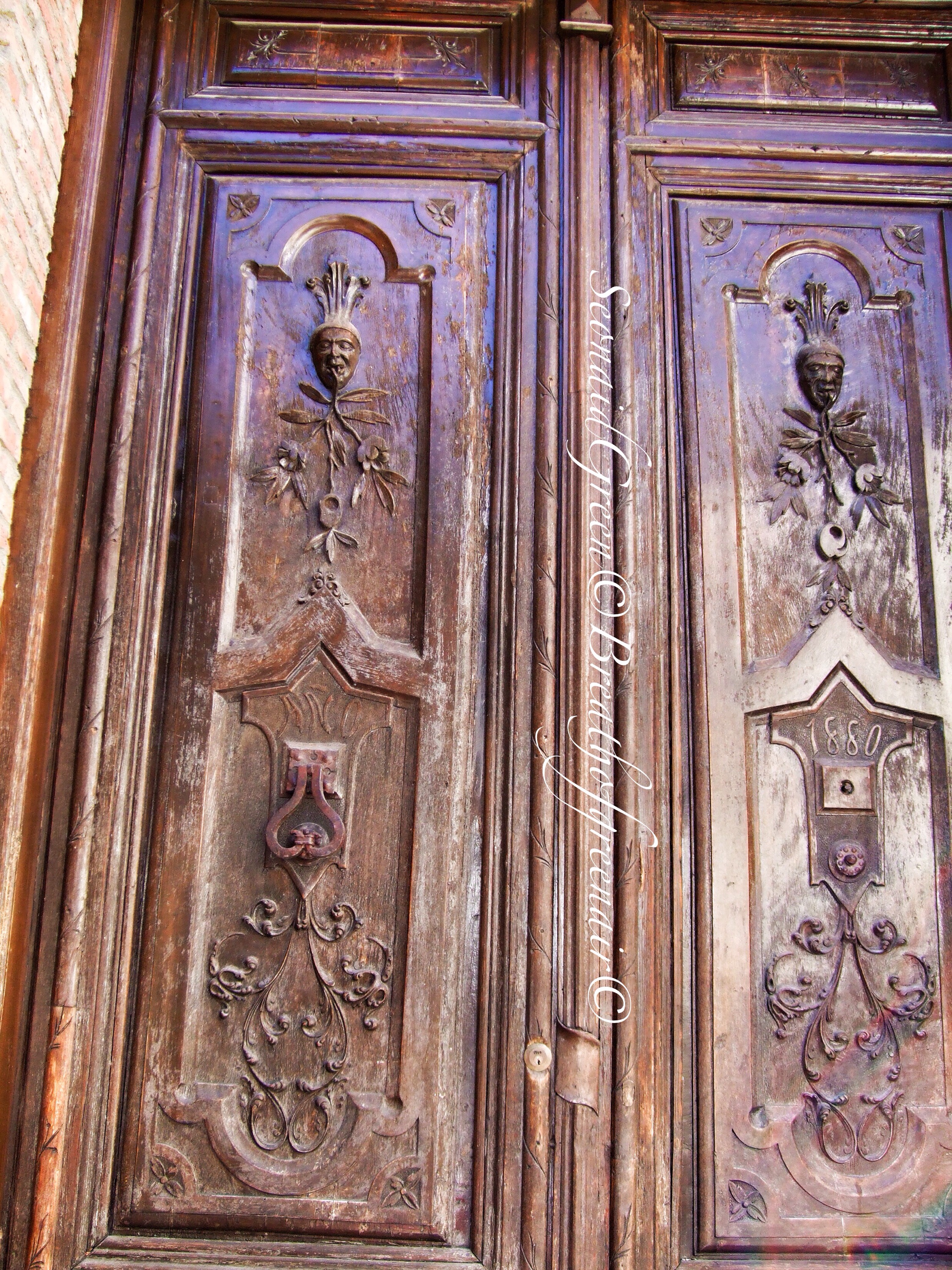
Those old doors which wear the marks of the passage of time are fascinating😊 There are just so many layers to consider in terms of meaning and symbolism too!
I love these doors. I also like to photograph doors, but I could never express myself verbally as eloquently as you have here.
Helen that’s very kind of you to say, but you might surprise yourself if you try😄 I have a habit of catching shots of doors wherever I find myself….and apparently it can be a little annoying when we’re somewhere with lots of interesting or unusual doors! I work with symbolism a lot when I’m helping people deal with difficult transitions…so perhaps that’s why the words flowed easily✨💕✨
Most interesting that doors have a similar sound in so many languages. Afrikaans, too, is ‘deur’ sounding like ‘dear’. No old equivalent in the African languages – but then, they didn’t have any doors, actually..
I love tracing the linguistic roots of words, and thinking of the people who carried those words into new lands💕😊
Love this. Always been fascinated with the symbolism of doors/gates etc… Especially from a mythological perspective.
Me too…any transition or luminal space raises my curiosity💕
Beautiful doors! Great post! Thanks for sharing!
My pleasure Shirley…lovely to have you following along 🙂
Oh, I loved reading this! Especially the reminder that we often have a choice whether to (try to) enter or not when we face a door. I want to believe that every door that closes for us means that another one opens up. Like in “every NO to something is a YES to something else”.
Thanks for another inspiring post, it triggers me to look for new doors to open, I feel it’s getting time.
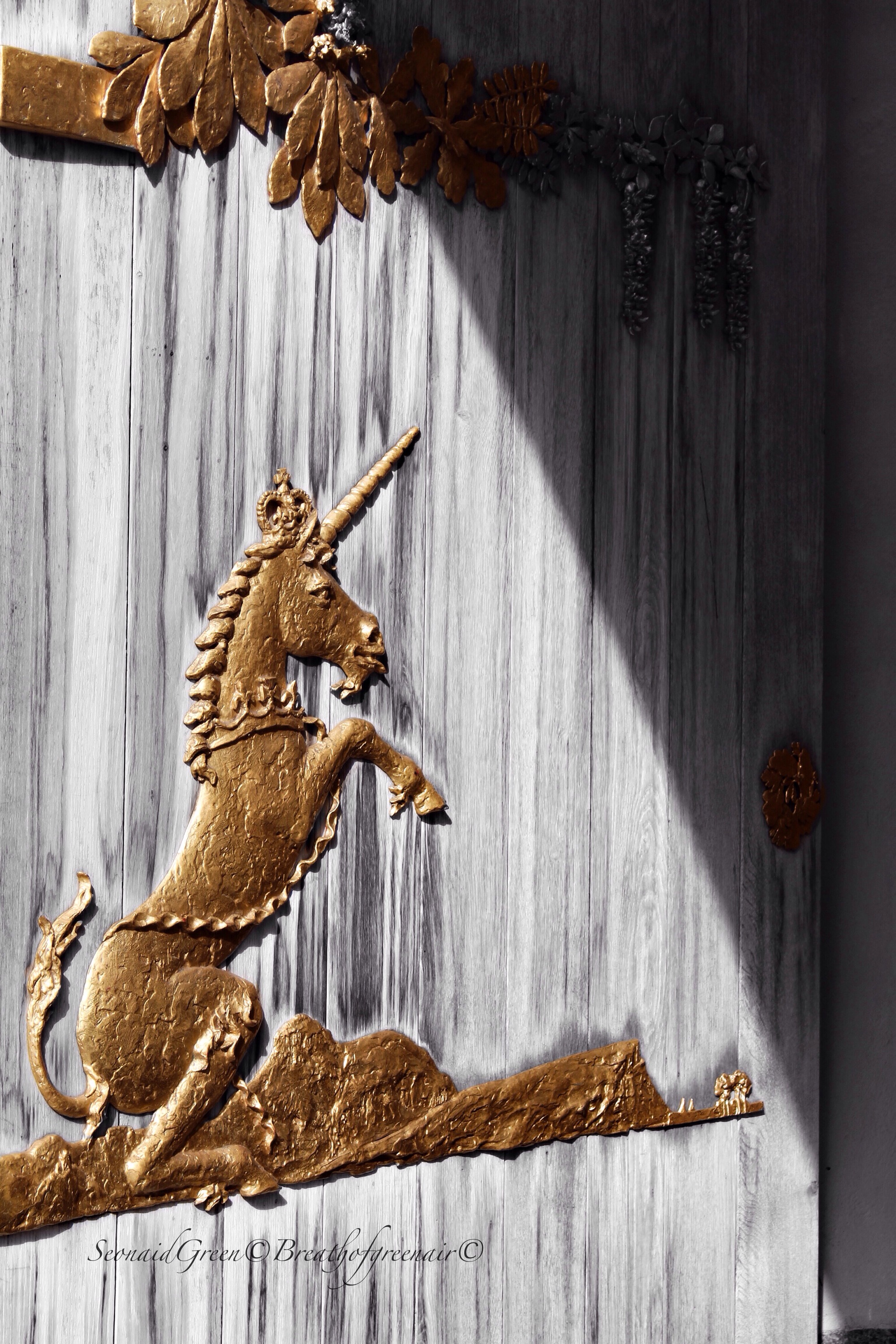
Heavenly doors, Seonaid! The unicorn and that last one are my favourittes – your words are magic…
when do you arrive? Then we can see unicorns together 🙂
I’ll try your mail instead – texting doesn’t seem to work!
Unicorns?
I enjoyed \reading your thoughts, Seonaid. Gorgeous gallery, especially the unicorn door.
You can’t beat a good unicorn…especially a golden one 🙂
Wow – a superb series of shots!
I know at our work, Seonaid, that our front door is very important. The fact that it is now transparent makes a potentially very scary event – entering the cancer support centre for the first time – less so. You can see through the glass that it is a warm and inviting place, bright colours, open spaces, cups of tea dotted around on low tables, smiling people. A solid door in this environment would add to the anxiety: first-timers fearing sombre faces, a check-in desk, lots of closed doors. Your lovely post and strong images remind me of how important doors are: symbols of new beginnings and of bravery.
That’s so true Kellie, a transparent door is a far less daunting guardian of the building….I suppose its almost open in that it allows us to see beyond, and yet its our choice whether we will open it and walk through, or turn away.
I think of you, as our nutritionist in the centre, opening the doors of inspiration, encouraging people to find new habits and patterns in terms of what passes the doorway of our lips 🙂
I like that analogy. Thank you honey xx
Your essay about doors is a perfect vehicle for your lovely photos. Always interested in learning the origin of words, I appreciated that part, too.
Thanks so much. I have a rather addictive habit of snapping doors where ever I go, and so was delighted at the chance to share some! I love knowing the origins of words too, somehow it deepens my understanding of the word…knowing its history…a bit like people I suppose 🙂
I love your insightful post Seonaid. There are doors to the heart and to the mind that remained closed too. Sometimes these doors can be opened, but sometimes these doors are only a false front. These doors can be as solid as a wood or stone door that is locked or blocked for some reason. Finding access to a door sure can be complicated! 😉
That’s so true Gwynn, doors are indeed complicated, and their symbolism scatters our language. Doors to the heart and mind are also usually protective, and in my psychotherapeutic work I’m often gently approaching old long standing doors and negotiating with the inner guardian….which has often been in place since childhood 🙂
Great to read your insightful and thoughtful post. Your photos are excellent. I like the way you have taken a one word prompt and turned it into a philosophical reflection.
Thanks Suzanne….I think I have a habit of doing just that!! My mind works in mysterious ways 🙂
Most interesting, and some lovely doors, Seonaid 🙂
Where is the first one ? it looks like somewhere exotic on the silk road.
It’s in the courtyard of a huge mosque deep in the heart of Tunisia….taken in 2008 long before the current troubles
What a lovely piece, Seonaid! And I’m quite captivated by that door with the unicorn. Where did you find that? 🙂
Thanks Jo, thats one half of the double doors which guard the Queens Gallery at Holyrood Palace, in Edinburgh. The other other door sports a very handsome golden lion 🙂
I never did get to see Holyrood Palace. It’s a definite for the next time… 🙂 (no plans 😦 )
What you have no travel plans….I don’t believe a word of it!
Just not in a Scottish direction 🙂
Now that sounds much more plausible!
Great post, expounding the wisdom behind doors. In an office setting, though, these represent power and authority. The more democratic and open the culture, the larger the open spaces in formal settings.
Of course, power and authority which must then be negotiated! I love your idea of a link between large formal open spaces and democracy….but I can also think of some rather undemocratic examples…Red Square, Tiananmen Square….
Magnificent door collection framed nicely by words.
Thanks Maverick….just a few of my rather large collection of doors!!