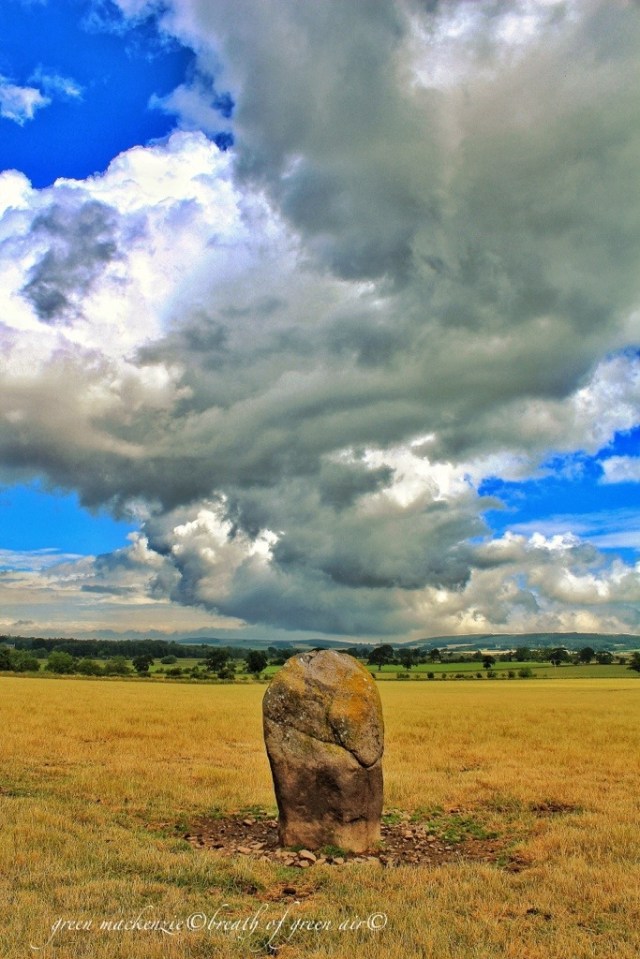
Scattered all across the British landscape are stone objects, wreathed in the swirling mists of the Bronze Age, or perhaps even the Stone Age. 4,000 to 6,000 years ago our ancestors raised these huge blocks of rock at sites which held meaning to them. This meaning is perhaps now lost, but the mystery of the stones still haunts us to this day. Generation after generation we have woven layers of tales around these mysterious objects, which sit so still and certain of their place upon the green earth. They make a bold statement even today, and draw some of us like moths towards to the light.
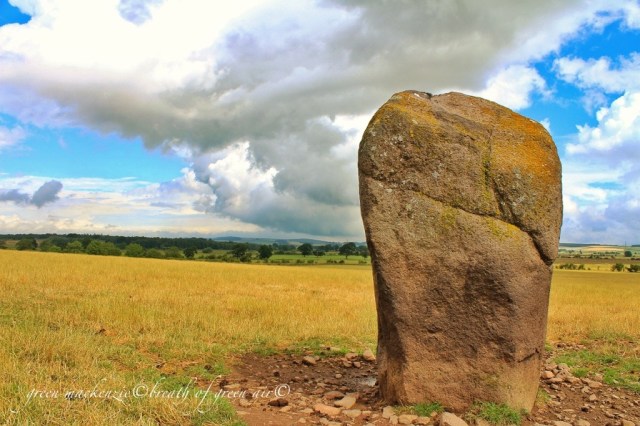
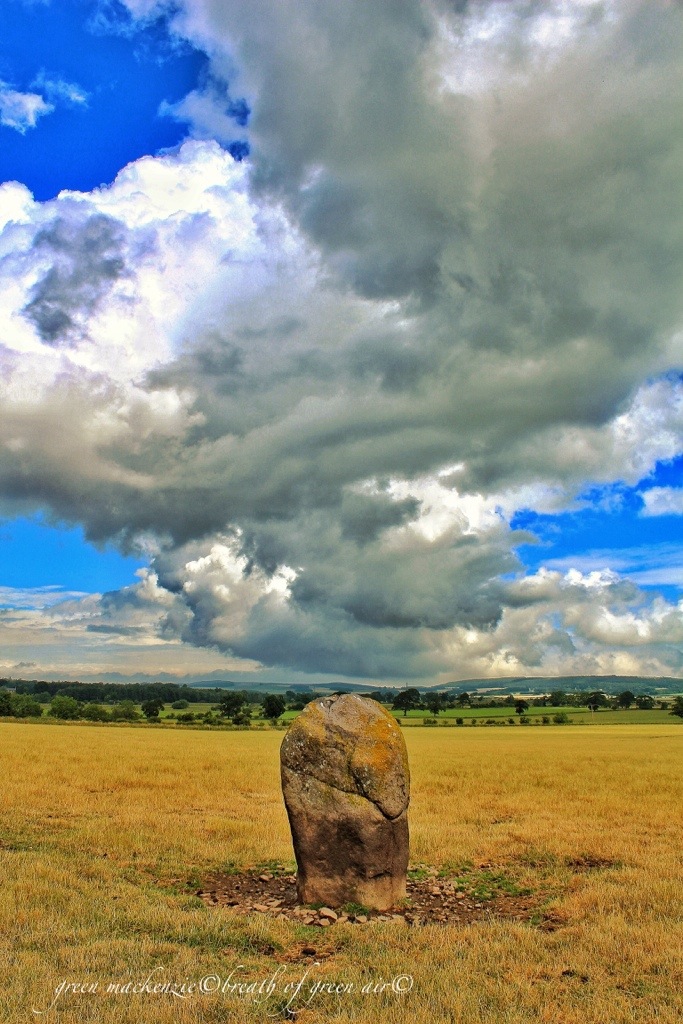
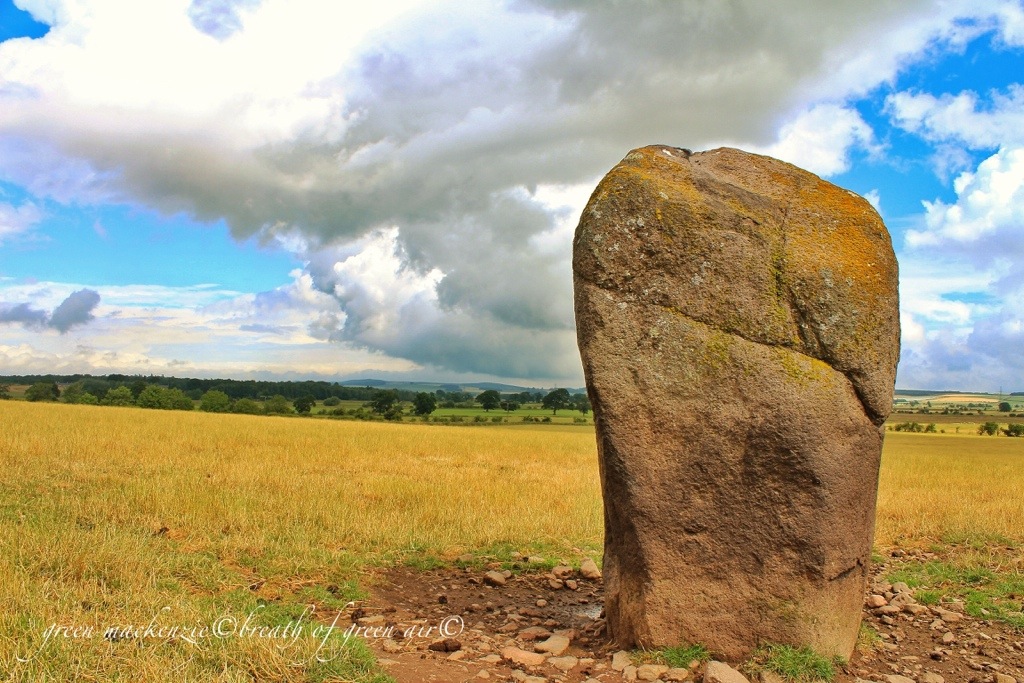
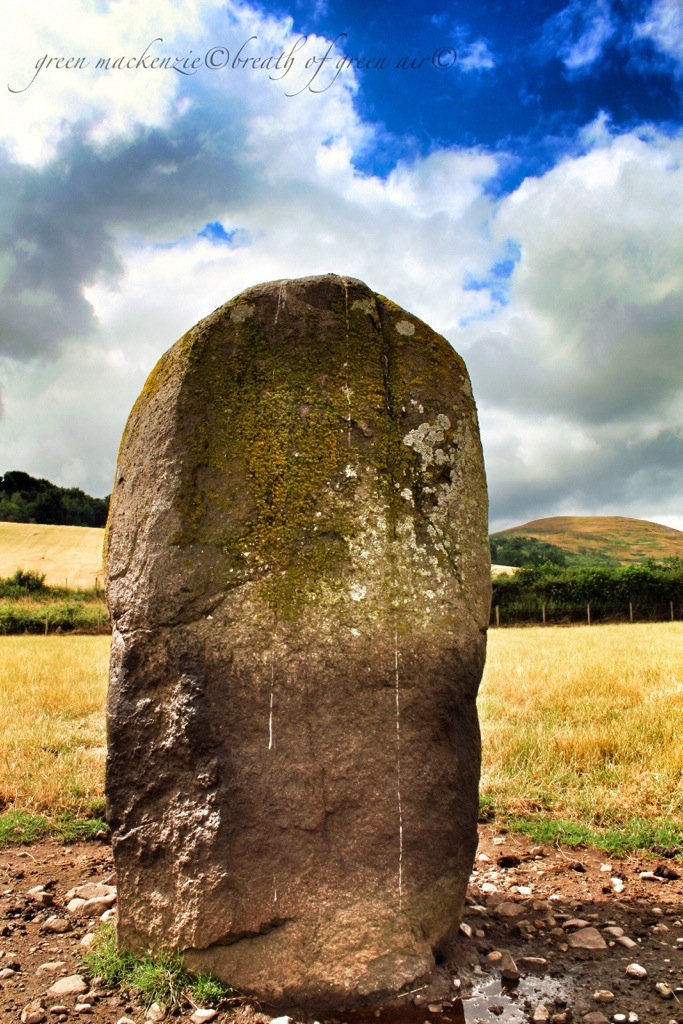
This solitary stone stands watch, as it has done for thousands of years, placed in rolling golden wheat fields at the edge of a range of hills which is peppered with ancient hill forts. It looks out across the plain to a further set of hills which hold one of the largest collections of stone rock art in the country. None of this can be by accident, an object of this size and presence doesn’t land by accident at its resting place. In fact it has a brother, another stone placed about 4 miles away, and between them they seem to ring the hill which is home to the ancient Brythonic capital of Yeavering Bell. Both stones bear the same name, the Battle Stone, but this is a recent story woven around the rocks a mere 600 years ago.
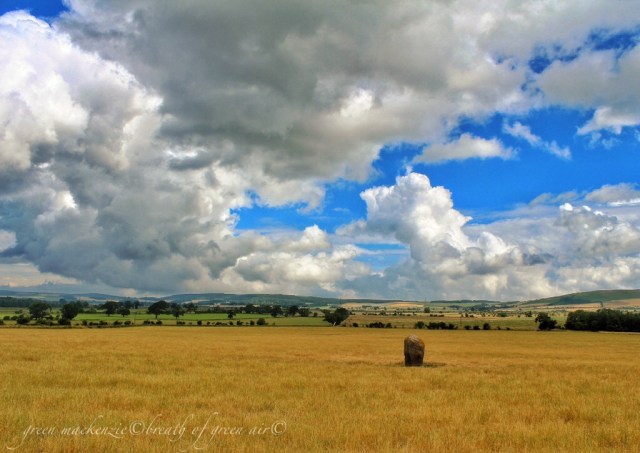
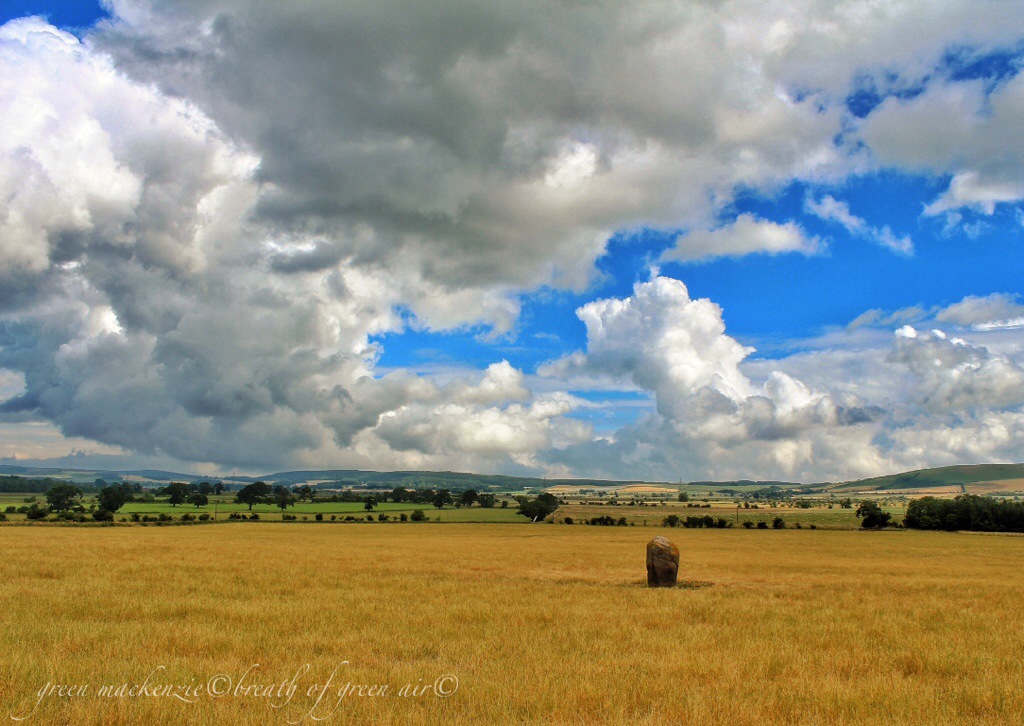
Here you can see the stone resting in its larger context, looking East towards Dodd Moor and it’s enigmatic cup and ring carvings. This landscape held a deep sense of meaning to the the people who called it home, and these huge stone objects are clearly marking something of that meaning. A bold statement in stone which has watched the waves of history roll through this often disputed land. All feels peaceful now as we look out towards the distant horizon, and when the Romans arrived and then left, these lands remained part of a British Kingdom ruled by the Goddodin tribe. Lying north of Hadrian’s Wall, these people were never tamed by the Roman yoke, but conflict and division would come soon enough in the shape of the Angles. This stone has seen it all, and remains yet, watching the land of Northumberland as history rolls through.
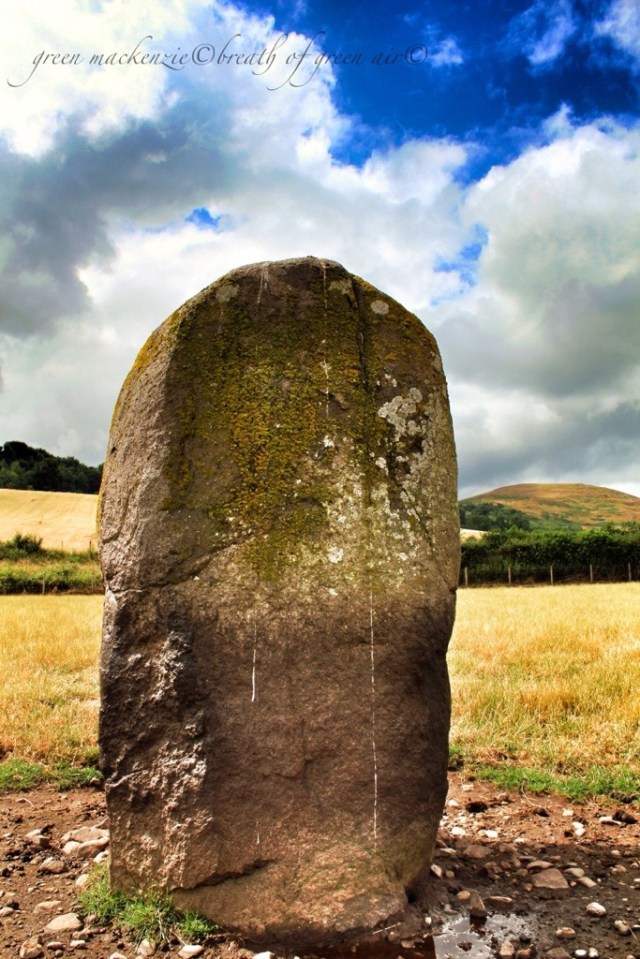
This is the view to the North West, and you can see the slopes of the Cheviot Hills rising towards the clouds. All along these hill tops our ancestors lived out their lives, having children, tending their animals and sharing meals together. We might live now in the fertile lowland valleys, in towns and cities of ever growing proportions, yet the basics of life remain, if we remember to look. The green earth is still our home, our source of nourishment and shelter, our source of health and fertility, our source of nationhood and belonging. Sometimes this gets obscured by the very recent layers of modern history, and we forget our sense of place. Perhaps these huge enduring stones can guide us to be still, to feel our feet upon the earth, and to know our place. To belong, is to rest a while and the stones can teach us this, if we let them.
See more responses to the theme of Object at the weekly Photo Challenge
Read about the mysterious history of the stone here












 breathofgreenair