
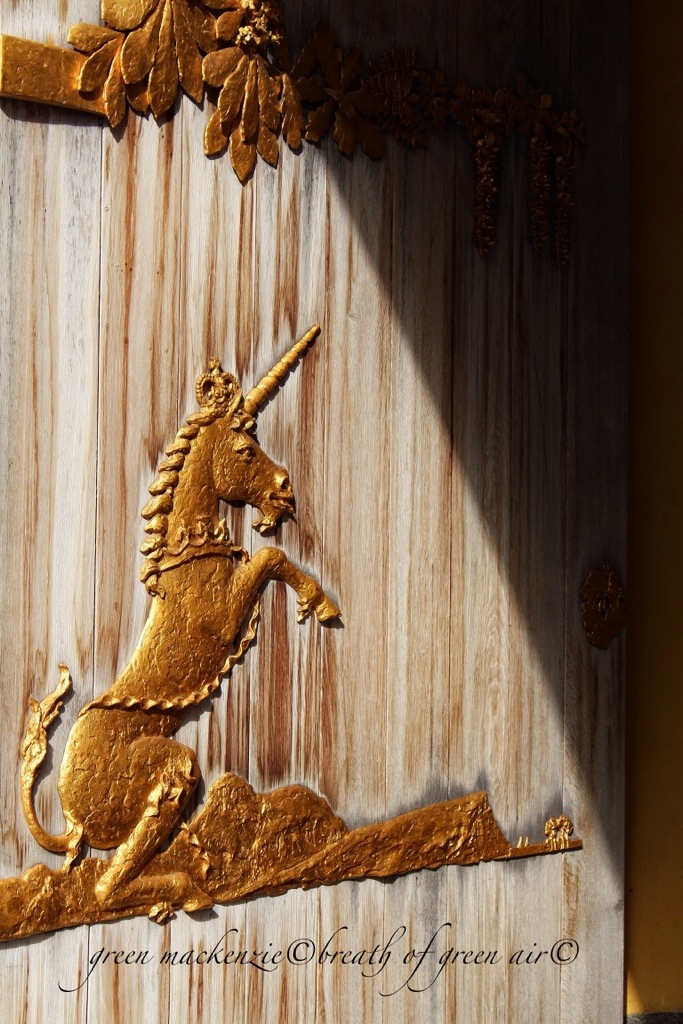
Wandering around Edinburgh, you will come across a lot of ancient symbols. They are carved into the stone of the old buildings, but are often overlooked, their meaning lost in the passage of time. Noticing and understanding the meaning of these symbols will unlock all sorts of interesting stories and links, deepening your understanding of the place and her people. One of the most common symbols scattered around Edinburgh is the unicorn, you will find them sitting high on important pillars and gate posts. This is because the Unicorn is the symbol of Scotland, it represents the spirit and soul of the nation, which in turn flows through her people. The unicorn itself symbolises purity of heart and ferocious fierceness. These qualities are said to be embodied in Scottish people, who value truth and honesty, and will fight fiercely to defend the weak and the underdog.

In the days before the internet, and even before radio and newspapers, information was fed out to the people via town criers who spoke the current news and royal decrees. They did this standing on the steps of Mercat Crosses all across Scotland , which were stone pillars topped by unicorns. The unicorn symbolised the truth of the words he spoke, but also represented the authority of Royalty. The unicorn is seen on the royal arms of Scotland supporting the royal crest, and since the union of the crowns in 1603, it is also seen on the British Royal Arms. The unicorn was joined by the lion of England and so we have the symbols of Britain’s soul and those of her people, the lion and the unicorn.

When you see these stone beasts, you will also see a shield, which bears the crest of Royal rule. The symbolic creatures of the nations souls remain unchanged through time, but the symbols on the crests they hold have gone through many changes. Understanding the meaning of the symbols on the crest will help you to date the carving. Before the union of the crowns, when the Scottish King James VI inherited the thrones of England and Ireland from Queen Elizabeth I, the crest of the Scottish Royal Throne was the red lion rampant.

You’ll find him perched on top of the royal crown all around town, and you’ll see him on the shields held by the unicorn and the lion. The motto of the symbol of royalty and royal rule in Scotland is “in defens”, which stands for the idea “when I act to defend, God defends me”. This cheeky lion is still the symbol of Royal Rule in Scotland, but he has been joined on the shield by the symbols of the English and Irish thrones, respectively the three recumbent red lions, and the golden harp. This symbolises the fact that one person historically has the right to sit and rule from these three thrones. When Mary Queen of Scots was on the throne here, the shield was shared between our cheeky rampant lion and the dolphins and fleur de Lille of the French Throne. Sometimes she even used the lions of the English throne! to make her point that she felt she should also be sitting on that throne. So these symbols can be seen as political propaganda of their day.

Lastly let’s look at this crumbling old symbol, it represent the City of Edinburgh. The crest with the castle of Edinburgh is supported by the maiden of the city and the doe or hart of Saint Giles, patron of the city. Edinburgh castle was known long ago as the Castle of the Maidens, which in itself is an interesting tale. I have always loved this symbol of my City, which recognises the supportive power of the feminine, long before John Knox spilled his poisonous misogyny from the pulpit. At the top of the symbol is an anchor, representing the city port of Leith, which connected us with Europe and the rest of the world. The city motto seen in Latin translates as ” Without our Lord all is in vain”. A centre of Royal power for hundreds of years, and an ancient sacred site in its distant past, Edinburgh is scattered with these stone symbols, see how many you can find when you walk her streets.
Check out other symbols at Ailsas weekly challenge.















 breathofgreenair